Category: Nieuws

  • Corona and the risks of a changing market

    The coronavirus outbreak is leading to challenging times in the maritime industry. The availability of cargoes is decreasing on certain existing routes and markets and many parties are finding themselves looking for alternatives beyond their usual trade.

    As a result, we have noticed that there is an increase in transits to and from destinations that pose a higher risk than the trades usually performed by our members, in particular with regards to:

    • Sanctions: Certain countries, parties and cargoes pose an elevated risk of being subject to international sanctions. In order to properly identify and control these risks, we recommend that our members obtain the full cargo specification, details of all parties involved and relevant documentation such as export licenses in advance. These particulars should be checked against the list of the Office of Foreign Assets Control (“OFAC”) and the Consolidated Sanctions List of the European Union as part of your sanctions check;
    • Piracy: Currently there is an increased risk of piracy, particularly in West Africa, but also still in the Gulf of Aden. Transiting these areas will likely require additional insurance policies and shipowners should take into account “Best Management Practices to deter piracy” (BMP) to be applied in such breach areas. This can lead to additional costs and delays.
    • Operational matters: In the case of known markets and parties, operational matters have often become routine. This changes if the market and parties are unknown. For example, there is often an increased risk of shortages, congestion and stevedoring damages in North and West African ports. We advise you to take this into account as far as possible by ensuring that the charterparty agreements contact appropriate provisions which ensure that the responsibility for these matters lie with the charterer and the contract caters for the associated time-related risks.
    • Identity of the parties: Often these trips are performed on behalf of unknown charterers and cargo interests. This often leads to an increased risk of cargo claims, such as shortages and quality disputes, but also to charterparty disputes and unpaid bills. The enforcement of outstanding claims can be jeopardised as a result.

    An additional insurance may be appropriate for some risks (see, for example, our circular year 2020/9 on K&R insurance and the possible obligation to report). Of course, we are also available to advise on how to formulate your agreements or to provide specific advice on a new destination or cargo.
  • Update: Democratic People’s Republic of Korea – enforcement of sanctions

    Further to the United Nations’ recently published Sanctions Report 2019/2020, we inform members as follows regarding the sanctions applicable to North Korea.

    The report concludes that North Korea is not taking the required steps to end its nuclear program. The strict sanctions therefore remain in force. In addition, it is noted that maritime transport is one of the main ways for the regime to import raw materials. The advice to shipping companies is to take into account stricter supervision and enforcement and, if possible, to carefully monitor transport from or to North Korea for any sanction violations. The report mentions the fact that ship-to-ship freight transfers (STS) are commonly used to deploy automatic identification systems (AIS) and cargo to smaller vessels from North Korea. Member States are called upon to map the destination for relevant loads. Another trend identified by the UN was the exploitation of the scrap ship market, where larger bulk scrap ships were used for cargo transportation.

    In light of the most recent UN report, the Club advises all members to ensure the highest level of due diligence to mitigate the risk of DPRK related activities. The penalties could lead to designation, asset freezing and listing in de OFAC, UN Sanctions List and/or European Consolidated Sanctions list. Any trade with North Korea will be monitored by regulatory agencies, including ship movements, using AIS and long range identification, satellite imagery and other means. Ships suspected of violating DPRK sanctions may be listed and / or searched and held in ports by the national authorities while investigations are conducted.

    Consequences for insurance coverage

    In addition to the fact that sanctions violations and the consequences thereof are excluded from cover, violations can also lead to a complete loss of cover. Even if a transaction is not sanctioned, it is likely to be impossible for the NNPC to assist a member in North Korea. We recommend avoiding transportation to and from North Korea altogether and taking all necessary precautions and carrying out checks on cargo which may be in any way linked thereto.

  • Update: Covid – 19 live blog The North of England P&I.

    In addition to our previous publications regarding the Covid-19 virus, and the extent to which the virus is affecting the maritime industry, we provide this update. Given the fact that Covid-19 will continue to affect the maritime industry in the coming period, more and more countries, organizations and ports are implementing measures and restrictions to combat the spread of the virus.

    One of our reinsurers, the North of England Protecting and Indemnity Association Limited, has created a platform in which they list the current restrictions and rules per country that the country, port authorities or organizations have to comply with and that vessels have to take into account.

    The information is available on their website.

    We advise our members to check the measures prior to a port call per country and port, in order to ensure compliance with the measures and to take into account the possible restrictions.

    Of course, our members can always contact our employees with specific questions.

  • New Best Management Practices (BMP) West Africa

    With this update we would like to inform our members about the existence of a new maritime safety guideline for West Africa (WA), published by the International Group of P&I Clubs in cooperation with other shipping industry associations, and with the support of governments and military organisations.

    The publication emphasises in particular the need for a Vessel Hardening Plan, which can ensure that vessels are properly prepared for operations in the Gulf of Guinea, where the threat level has recently risen significantly.

    The BMP WA is a new addition to the well-established BMP series, which was last updated in June 2018, when the 5th edition was published. BMP5 is a compilation of comprehensive empirical guidelines for vessels transiting the Red Sea, the Gulf of Aden, the Indian Ocean and the Arabian Sea.

    This latest BMP guideline complements the anti-piracy guidelines of the International Maritime Organisation (IMO) Resolutions and Circulars and can be found at www.imo.org

    The IMB Piracy Reporting Centre (IMB PRC) website also contains a wide number of resources such as Advice to Masters, a Live Piracy Map/Report and Piracy Prone Areas, all of which can be found here.

    We trust that this information is of assistance to our Members. In case of any specific questions or matters at hand we invite our Members to contact us at claims@nnpc.nl.

  • Update: COVID-19 International Group Information Dashboard

    The maritime industry and the society at large are facing challenging times. Measures implemented by some ports and countries across the globe to prevent the further spread of COVID-19 are raising significant operational consequences for all parties engaged in the maritime sector.

    The International Group of P&I Clubs has launched a new online digital tool (dashboard) to assist shipowners, charterers, operators and other parties in the maritime sector to in tracking country and port specific information.

    This interactive tool will allow the maritime industry to identify commercial risks and physical threats to shipping around the world and it provides live updates as to the number of confirmed cases of the virus, countries at risk and what to look out for.

    The tool sources data from all 13 International Group Clubs, the International Maritime Organization (IMO), the World Health Organization (WHO) and other leading sources, which can assist ships with chartering, operations and port specific information.

    Access to this online dashboard is available using the following link: https://www.igpandi.org/covid-19

    The International Group will continue to provide updates through this dashboard on the restrictions imposed and the measures taken by ports and countries around the world as a result of COVID-19 whilst any such restrictions remain in place.

    We trust that this newsletter is of assistance to our members, however in case of any specific questions, we invite our members to contact us at claims@nnpc.nl.

  • IMO 2020: EGCS Discharges

    Since the introduction of the IMO 2020 regulations, scrubbers have emerged as an option for complying with the new regulations regarding sulfate emissions. Many ship owners have installed scrubbers as a way of converting existing systems to be IMO 2020 compliant. However, differences in the rules per country regarding the use of scrubbers and the discharge of washing water are starting to have a significant impact on how scrubbers can be used.

    In an increasing number of countries, limitations are being placed on where wash water can be discharged and where open loop operations can be conducted. For example, Belgium has recently introduced legislation which limits the discharge of washing water to open sea more than 3 nautical miles from the shore, and provided that there is no breach of the objectives of the EU Directive. In China, the discharge of wash water has likewise been banned in all but limited areas. Vessels which are unable to store wash water must switch to low sulphur fuels before entering any prohibited areas. In Portugal, the use of open-loop scrubbers is not permitted at all when the vessel enters the port, along the harbor channel and at the quay.

    It appears that the discharge of washing water from “open-loop” scrubbers into territorial waters is increasingly being limited or banned. We recommend owners to contact their agents before entering a harbor to confirm the rules in force there. In this way breaches of IMO 2020 can be prevented.

  • Update: Coronavirus – latest developments various countries

    This update follows on our previous newsletter on COVID-19 “Update Volume 2020/10 Update: Coronavirus – Romania”, published on the NNPC website on 1 April 2020.

    The corona virus has resulted in precautionary measures and various imposed restrictions virtually in all countries all over the world. In many countries, all commercial air traffic is no longer permitted. With respect to crew changes, it will need to be taken into account that this will be possible to a very limited extent. Members are therefore advised to stay in close contact with their local agents in relation to the current restrictions of that specific country or port.

    • Spain: The Spanish government has meanwhile requested approval to extend the state of emergency from April 12 to April 26. In view of the latest developments in Spain, this is likely to be extended. For the time being, all Spanish port remain open for regular cargo operations However, all stevedores and other persons boarding vessel will wear protective equipment and will respect the 1.5 meter rule. If one of the crewmember has corona symptoms, this must be reported immediately to the port authorities.
    • France: France confirmed on April 13 that the lock-down will be extended until May 11. We understand from our French correspondent that the cargo operations will continue in all ports, however, the stevedores respect strict use of the protective equipment and these are limited available. If these are not available, the cargo operations could be delayed or may not even take place. Vessels are requested to have at least their own protective equipment on board and, where possible, to bring extras.
    • Romania: The Romanian government has temporarily curtailed exports of agricultural products through a regulation. Until May 16, 2020, no export is possible of wheat, barley, oats, corn, rice, wheat flour, soy, sunflower, seed oils, sugar and other bakery and pastry products.
    • Caribbean (ABC islands, Colombia, Cuba, Panama, Venezuela etc.)
      Our correspondent Cariconsult International has provided us with a comprehensive update of all travel restrictions in the countries (30+) in which they operate. Here you can find the update of April 7, 2020.

    For the latest updates for specific countries and ports, we recommend consulting the Bimco and Gac website. Naturally, members are advised to request updates from their local agent in question on a regular basis.

    For specific questions, our members can always contact us at claims@nnpc.nl.

  • Inland shipping and Corona measures

    The Corona measures are having an increased effect on inland shipping with the number of shipments decreasing and numerous other challenges being faced by shipowners. In several cases referred to us, charterers have attempted to terminate the charter party agreement or to add additional clauses in order to restrict their liability costs and delays caused by corona measures.

    Many charter party agreements already contain a clause for force majeure, for example:

    “The Parties hereto are not responsible for failure to perform hereunder due to force majeure, which includes, but not be limited to any blockade of waterways, strike, ice, war or threat of war, or any other cause, all of which shall be beyond the reasonable control of such party.”

    Under Dutch law an appeal on force majeure may be relied upon when a voyage becomes impossible due to circumstances which are out of their control. A lawful appeal to force majeure holds that a party cannot be held liable for damages arising from the non-performance and it also gives the right to (temporarily) suspend performance. The party invoking force majeure will bear the burden of proof. Whether or not an appeal on force majeure is justified, depends on all circumstances and the relationship between the parties. A charter agreement for cargo should for example be assessed differently than a passengers agreement. For force majeure to apply it is not enough that a voyage will be longer or more expensive, it is necessary that the circumstances have made performance impossible.

    Due to the fast changing circumstances and measures we note that a lot of charterers try to limit their liability by adding a new force majeure clause to their charter party agreements, such as the following:

    “If the charterer is prevented from fulfilling its obligations under this agreement as a result of the effects of the corona crisis or of corona measures, this shall constitute force majeure. The Charterer shall not be held liable for any delays or damages arising therefrom. The charterer may suspend its undertakings under this agreement as long as the force majeure endures without being liable for any damages.”

    By including such a clause it will be easy for the charterer to avoid liability for delay or non-performance caused by effects of the corona crisis.

    We do not recommend accepting such unilateral clauses. When it is impossible to avoid accepting such a clause, parties should identify the major risks upfront and mitigate them as much as possible such as by making arrangements beforehand with regard to alternative port or laytime and demurrage. Should you have any questions, please contact EOC or the NNPC.

  • Update: Coronavirus – Romania

    This update follows on our previous newsletter on COVID-19 “Volume 2020/8 Update: Coronavirus” as published on the NNPC website on 26 March 2020.

    Today a new regulation was issued by the Romanian Ministry of Transport & the Ministry of Health. This regulation requires all vessels calling the Romanian Ports to be equipped with the necessary protection equipment when pilots are required on board. If the vessels are found not to be equipped with necessary protection materials, then the vessel will be required to wait in quarantine period for 14 days counting from the date of last port of call.

    Please find hereunder the list of protective equipment required by the port authorities to be present and available onboard:

    Disposable protective gloves;
    Disposable face masks with filter;
    Protection glasses;
    Alcohol type disinfectant/sanitizer;
    Disposable overalls.
    Should the vessel not have disposable overalls on board, then overalls made of cotton should be made available, which can be disposed when the pilot is leaving the vessel. This last requirement applies only to vessels whose last port of call was one of the countries where the pandemic is widespread. There is no specific list attached to the Regulation but based on information locally available the following countries are declared as so-called “red zones”: Italy, Spain, Germany, France and Iran.

    Anchorage areas where the ships will be allowed to wait in quarantine are the port of Sulina (for the vessels coming through Black Sea) or 44 NM off Danube river (for the vessels which sail through the Bystroye Canal). For sake of good order, if quarantined, members are advised to doublecheck with their local agent in respect of exact anchoring positions.

    Members are advised to supply their vessels calling Romanian Ports with necessary protection equipment listed above in order to avoid any delays.

    Furthermore we would strongly encourage members to request regular updates from their local agents with respect to the current restrictions in the respective load and discharge ports. Updated information per country can be found in the Novel coronavirus section on BIMCO.org. More general information on COVID-19 and the latest WHO situation reports can be consulted here.

    We trust that this newsletter is of assistance to our members, however in case of any specific questions, we invite our members to contact us at claims@nnpc.nl

  • Renewal update K&R insurance

    Through this article we would like to inform you about important changes relating to the Kidnap & Ransom (K&R) cover. The NNPC has taken out a K&R insurance with Aspen for its members. As of 29 March 2020, this insurance is renewed for one year and offers NNPC members a free cover against the financial risks of piracy.

    Aspen’s K&R insurance only excludes a few areas worldwide. For the upcoming year only Yemen and Somalia are completely excluded. In addition, there are only 2 areas for which an additional premium applies: the Gulf of Guinea and the Indian Ocean/Gulf of Aden. Last year, the coordinates of these areas were exactly the same as those mentioned on the “Hull War, Piracy, Terrorism and Related Perils Listed Areas”, also known as the JWLA-024.

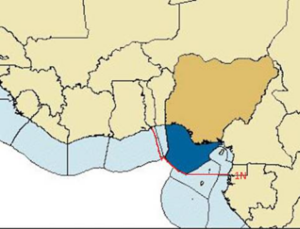
    However, as of 29 March 2020, the excluded area in the Gulf of Guinea will be expanded and additional K&R coverage will be necessary for all transits to or through the waters north of 1°N in the Gulf of Guinea (this was previously 3°N ). This means that the waters of Cameroon, Nigeria and (a part of) Soa Tome & Principe are no longer part of the free world wide cover. To get a better understanding of this we would like to share the following illustrative map as a visual indication:

    The red line shows the boundary between the worldwide cover and the excluded area. In addition to the expansion of the excluded area Aspen also increased the premium and the minimum freeboard requirements for transits to or through this areas.

    As far as the excluded area in the Indian Ocean/Gulf of Aden is concerned, we can confirm that this area remains the same as listed on the JWLA-024. The premium for trips to or through this area have been adjusted and have been reduced compared to last year.

    Furthermore, similar to last year, you will need to notify our Underwriting department if you are planning to make transits to or through one of the other JWLA areas in order for us to guarantee cover.

    In summary, if you wish to use NNPC’s K&R cover for our members you should notify us in advance of all trips to the Gulf of Guinea and JWLA listed areas. In most cases we will be able to confirm cover within a day but for some areas we may have additional requirements such as a citadel, guards, razor wire etc. and/or charge an additional premium before we can confirm that K&R cover remains in place.

    If you have any questions about these changes or would like to receive a quote for an upcoming trip through a risk area, please contact the Underwriting department at underwriting@nnpc.nl.