Category: Nieuws

  • MARPOL – Emission Control Areas (ECAs)

    MARPOL – Emission Control Areas (ECAs)

    The IMO (International Maritime Organization) regulates air pollution from ships under MARPOL Annex VI. This annex sets maximum emission limits for sulfur oxides (SOx), nitrogen oxides (NOx), and particulate matter. Since 1 January 2020, a global limit on the sulfur content in marine fuel has been in effect, reduced from 3.50% to 0.50% m/m. Certain zones, known as Emission Control Areas (ECAs), enforce even stricter limits, allowing a maximum of 0.10% sulfur in fuel.

    An overview of these areas, including the ECAs, can be found via this link.

    Differences in International Enforcement

    As of 1 May 2025, the Mediterranean Sea has been added to the list of ECAs. Additionally, MEPC 82 has designated the Canadian Arctic region and the Norwegian Sea as new ECAs. Not all countries enforce the sulfur limits for marine fuel, as some have not ratified MARPOL Annex VI. An up-to-date list of countries that have ratified this annex is available here.

    In countries that have not ratified MARPOL Annex VI, we advise shipowners to consult local regulations and/or the flag state’s requirements to determine applicable sulfur limits.

    Fuel Changeover Required within ECAs

    Ships must flush their fuel systems and switch to fuel with a maximum sulfur content of 0.10% before entering an ECA. This process requires specific calculations, taking into account the volume of the fuel system, the sulfur content of the fuels used, and current consumption rates. The details of the fuel changeover—including quantities, date, time, and location—must be carefully registered and documented in the logbook. Ships may only switch back to fuel with a higher sulfur content after exiting the ECA.

    Use of Scrubbers

    In many ECAs, ships may use scrubbers to comply with the IMO 2020 sulfur regulations. Scrubbers remove sulfur from exhaust gases using wash water, making it possible to use higher-sulfur fuel, provided the scrubber is operated and maintained in accordance with IMO guidelines. Scrubbers can operate in open-loop mode (discharging wash water directly into the sea) or closed-loop mode (where wash water is treated and reused). Since regulations vary by country, we strongly advise our Members to always check local requirements carefully.

    We continuously keep our members of course informed of any developments. Should you require advice in the meantime, please don’t hesitate to contact the NNPC claims team at claims@nnpc.nl.
  • Israel Security Update – Status of Israeli Ports Following Escalation with Iran

    Israel Security Update – Status of Israeli Ports Following Escalation with Iran

    In the wake of the recent escalation between Israel and Iran, we wish to update our Members on the current operational status of Israeli ports.

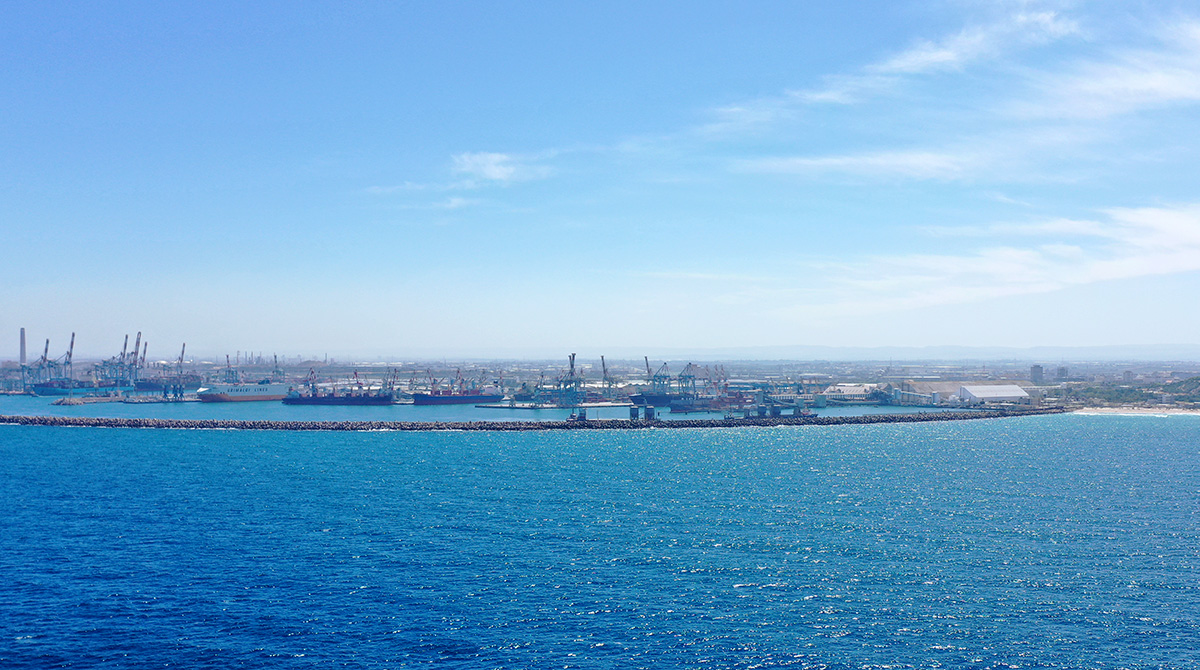
    Despite the current hostilities, our correspondents confirm that Israeli ports are currently operating without significant restrictions. According to the Israeli Ministry of Transport, the ports of Haifa, Ashdod, Ashkelon, and Hadera are open for usual vessel operations. The security level at all ports remains at ISPS Level 1. Members should note that temporary restrictions are in place for vessels carrying hazardous materials (HAZMAT) to Ashdod Port. As per instructions issued by the Ministry of Transport, the following apply:

    • Entry of any vessel carrying HAZMAT requires prior approval from Israel’s Administration of Shipping and Ports.
    • Shipping agents must submit detailed HAZMAT lists (covering import, export, and transit) 48 hours prior to the vessel’s arrival.

    A summary of the HAZMAT restrictions has been published by the port authorities.

    As the current situation poses an operational and security risk changes to port accessibility, warrisks or restrictions on cargo types (particularly hazardous materials) can have a direct impact on the performance of voyages, liabilities and insurance coverage and result in delays to the vessel. We recommend that Members maintain close contact with their local agents.

    Finally, Members are also reminded to remain mindful of the potential implications of the Arab League boycott of Israel when planning port calls. While enforcement has been limited in recent years, a stricter approach may emerge in light of recent developments. Certain member states may take action against vessels that have previously called at Israeli ports, including restrictions on entry or clearance.

    We will continue to monitor the situation and provide further information as it becomes available. For assistance, please contact us at: claims@nnpc.nl.

  • The external costs of claims handling

    The external costs of claims handling

    In recent years, we have seen a decrease in the number of files, but the costs of lawyers and experts remain high. The trend of rising costs is connected to several causes, such as inflation, the limited availability of suitable experts and lawyers and the growing complexity of certain technical and legal issues. Another important factor is the number of reinsurance claims, such as wreck removal, where NNPC’s own retention on costs with the reinsurer is usually quickly spent.

    Over the last year, NNPC therefore took additional steps to better control these costs on a per file basis by taking the among others, following measures,:

    1. Working with a fixed pool of service providers , who have experience of working with NNPC and its Members.
    2. At the start of each claim, a critical assessment is made of the need for an expert or lawyer and clear instructions given on the nature and scope of the assignment. During the assignment also NNPC will also give new instructions in a timely manner or terminate an assignment where all necessary information has been collected and the inspection has been duly carried out.
    3. Where possible, by working on the basis of a fixed fee or indication that take into account the nature and complexity of the assignment.
    4. By properly coordinating the handling of the file and the role of the expert or lawyer with the Member to ensure that there is clarity about their role and attendance on board. For example, during an inspection on board a ship, assignments can often be handled much more efficiently with the assistance of the crew.
    5. By taking into account previous experience with certain cargoes, ports or parties. For example, where specific damage to a steel cargo is regularly reported in the same port, the claims handler can often make use of existing information and experience.

    Based on the cost figures for 2024, these measures appear to have had an effect. Whilst it is too early to make any predictions for the current year we are confident that with the right preventive measures, the costs of claims handling will be further mitigated.

  • The consequences of an incorrect stowage factor

    The consequences of an incorrect stowage factor

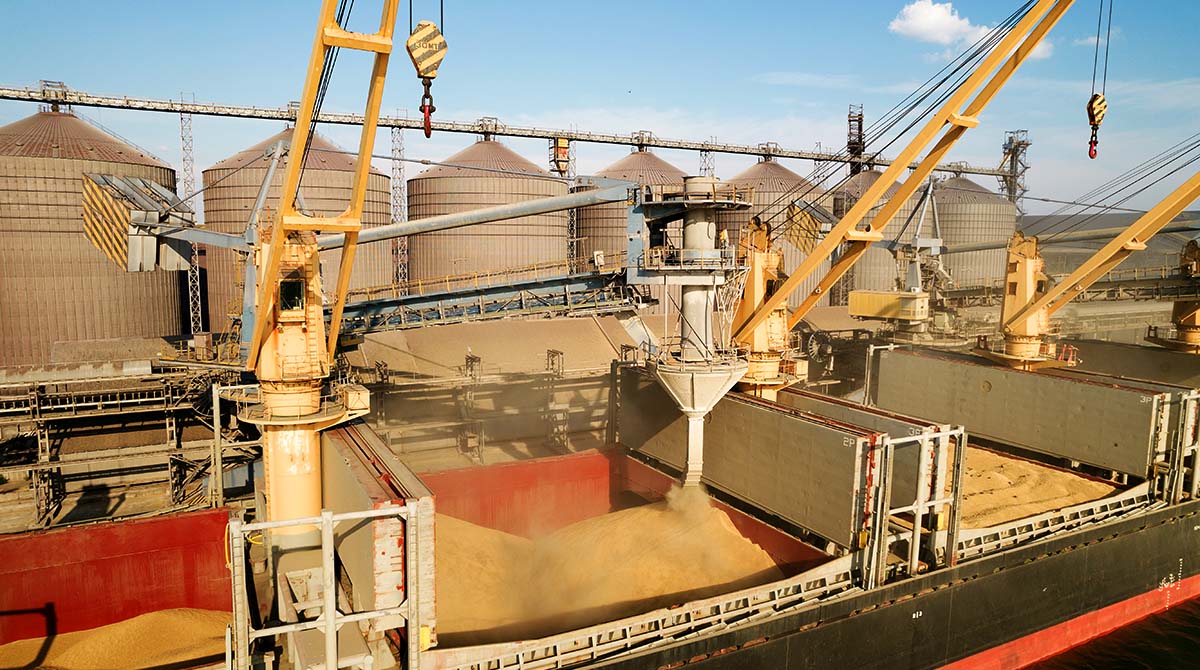
    NNPC has recently dealt with a number of cases in which a problem arose as a result of an incorrect stowage factor of the cargo. This can cause problems when calculating freight, loading the cargo, the stability of the ship or the description of cargo when issuing a bill of lading.

    In many cases, the contract terms will include a allowable margin for the stowage factor, but often this is not verified in advance. The problem then only surfaces when part of the cargo has already been loaded and a discussion inevitably arises with the charterer or shipper about the measures to be taken and the need to unload or stow the cargo again. In this regard, it is relevant to consider the manner in which a stowage factor has been calculated.

    • Stowage factor is defined as the volume occupied by one metric ton (1,000 kg) of a product in cubic meters (m³/MT).
    • The stowage factor of the cargo can be affected by several factors, including:
      • Type of cargo: For cargoes such as grain, there are many different types with varying densities, so the stowage factor can vary considerably from one cargo to another.
      • Moisture content: Higher moisture content increases bulk density, making grain heavier and can lead to clumping or mold formation, which affects the stowage factor.
      • Grain size and shape: Smaller or irregularly shaped grains can be stowed more compactly, while larger grains take up more space.
      • Stowage method: The way in which cargo is loaded (e.g. bulk or bagged) and the degree of compaction affect the density and stability.
      • Temperature: High temperatures can cause grain to expand or cause moisture problems, which affects the stowage factor.
      • Loading and unloading procedures: The speed and method of loading/unloading may cause air entrapment or uneven distribution.

    Due to the various factors, the stowage factor may differ significantly from the factor as agreed in the contract terms and may lead to significant operational problems. A stowage factor that is lower than agreed can lead to the cargo shifting because insufficient volume is avilable to be loaded, thus endangering the stability of the vessel. On the other hand, a stowage factor that is significantly higher than previously specified can lead to the cargo not being able to be loaded in full. In such cases, the cargo will have to be discharged and re-stowed in whole or in part, which can of course result in significant additional costs and loss of time.

    In order to limit the above risk, we recommend ensuring that the charter party conditions are specific and preferably do not contain general exclusions, such as “Without Guarantee” or “About”. Standard contracts such as GENCON or BIMCO usually leave a margin for the stowage factor. If no margin is explicitly specified, a “reasonable” margin is assumed, often considered to be around 5% for bulk cargoes such as grain. As far as possible, the cargo and stowage factor should be determined in advance so that the chance of complications or disputes is limited.

    The NNPC claims team is available at all times to review draft contracts and clauses. Members are invited to contact the claims team via claims@nnpc.nl for support or advice.

  • U.S. Adjusts Port Fees on China-Built Ships

    U.S. Adjusts Port Fees on China-Built Ships

    As of April 20, 2025, the United States has proposed a revised policy on port fees for Chinese-built and operated ships docking at U.S. ports, scaling back earlier proposals after significant pushback from the global maritime industry.

    The Trump administration’s plan, aimed at reviving U.S. shipbuilding and countering China’s dominance in the sector, initially proposed fees as high as $1.5 million per port call. However, following concerns about supply chain disruptions and rising consumer prices, the U.S. Trade Representative (USTR) finalized a more moderate fee structure, effective April 17, 2025. We confirm the most important developments as follows:

    1. Starting October 14, 2025, Chinese-owned and operated vessels will face fees of $50 per net ton, increasing annually by $30 over the next three years.
    2. The fees will be based on specific vessel calls and will no longer be targeted on fleet composition.
    3. For Chinese-built ships operated by non-Chinese firms, fees begin at $18 per net ton ($120 per container), with $5 annual increases. These fees, capped at five charges per vessel per year, are significantly lower than the original $1.5 million flat fee per port call, which industry leaders warned could cost carriers billions and disrupt trade.
    4. A number of exclusions have been incorporated as follows:
      1. The fees imposed in this Annex do not apply to U.S. government cargo.
      2. The fees imposed in this Annex do not apply to the following Chinese-built vessels:
        1. vessels arriving empty or in ballast;
        2. vessels with a capacity of equal to or less than: 4,000 Twenty-Foot Equivalent Units, 55,000 deadweight tons, or an individual bulk capacity of 80,000 deadweight tons;
        3. vessels entering a U.S. port in the continental United States from a voyage of less than 2,000 nautical miles from a foreign port or point;
        4. specialized or special purpose-built vessels for the transport of chemical substances in bulk liquid forms;

    We refer to a full copy of the text of the USTR Announcement, available here.

    We note that these proposed port fees are now significantly moderated from the prior proposals and in particular for NNPC members are likely to have limited impact. The NNPC is considering the full text of the Announcement and invites members with questions to contact our claims team via claims@nnpc.nl.

  • NNPC general meeting 2025

    NNPC general meeting 2025

    [vc_row height=”auto”][vc_column][vc_column_text]At the start of each spring, NNPC holds its general meeting. An important event on our yearly calendar, in which the annual report is presented and a special guest is invited to hold a lecture about a current topic in the Dutch maritime world.

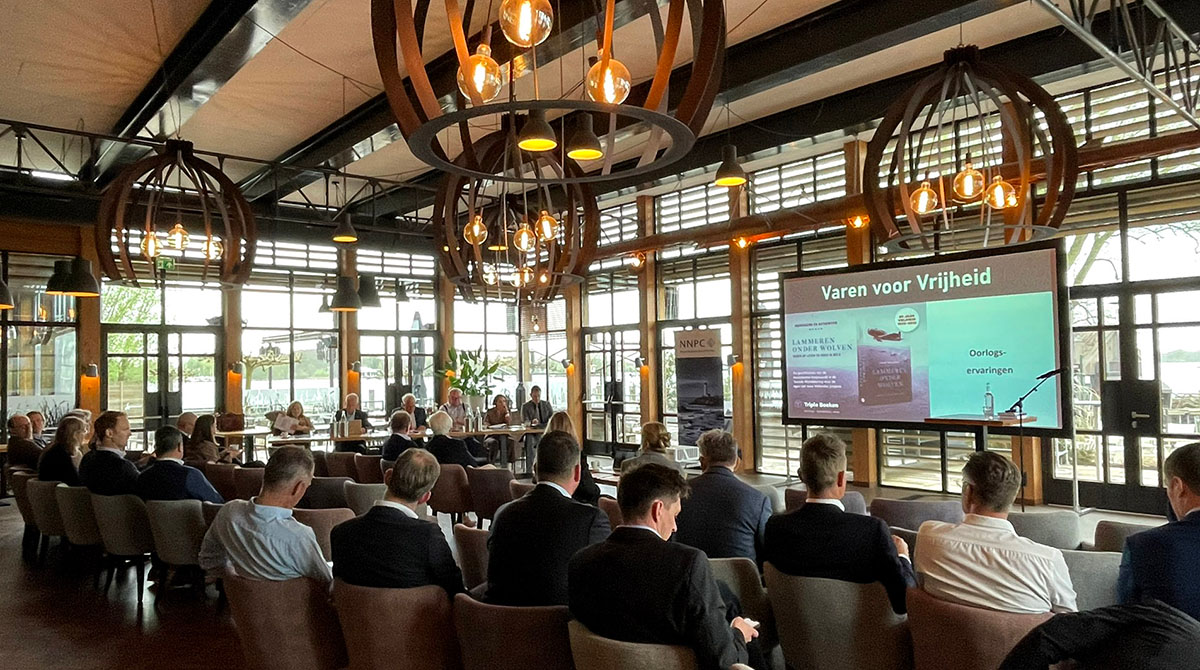
    This year the meeting was held on the 17th of April 2025. As usual we started with a look back on the previous year. What is the current state of affairs and how is NNPC developing? One of the most important things in recent years is the tight collaboration with NorthStandard and our partnership with IMU, which allows NNPC to focus on the future of P&I and marine insurance.[/vc_column_text][us_separator size=”custom” height=”30px”][us_image image=”14803″ size=”full” link=”%7B%22url%22%3A%22%22%7D”][us_separator size=”custom” height=”30px”][vc_column_text]

    Presentation: ‘Lammeren onder wolven’

    After the business part of the meeting there was a lecture held by Jacob Haasnoot, author of the book “Lammeren onder wolven: varen op leven en dood in WOII” (“Sheep among wolves: life-and-death sailing during WWII”). In it, he takes the reader along with “the Dutch merchant navy’s nerve-wracking battle against an enemy sowing death and destruction with submarines, combat planes and sea mines – turning the oceans into battlefields.”[/vc_column_text][us_separator size=”custom” height=”30px”][us_image image=”14800″ size=”full” link=”%7B%22url%22%3A%22%22%7D”][us_separator size=”custom” height=”30px”][vc_column_text]The occasion for this presentation is NNPC’s sponsoring of the “Varen voor vrijheid” exhibit (“Sailing for freedom”) in the Katwijks Museum. This exhibition is an initiative of the Stichting Koopvaardijpersoneel 1940-1945.

    It brings attention to a forgotten chapter of history, namely the crucial role the Dutch merchant navy played in the liberation of Europe and Asia during the Second World War. The exhibit runs from May 3rd to September 7th 2025.[/vc_column_text][/vc_column][/vc_row]

  • Legacy and Future: The Road to 2028

    Legacy and Future: The Road to 2028

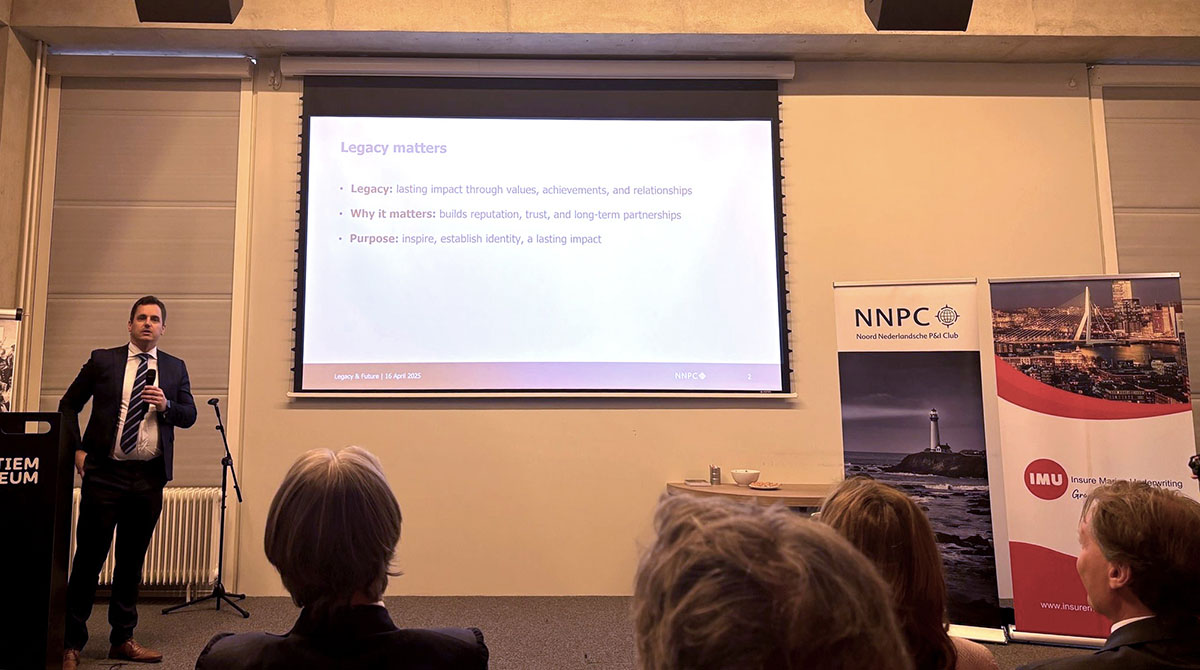
    [vc_row height=”auto”][vc_column][vc_column_text]Under the name “Legacy and Future: The Road to 2028”, NNPC and IMU organized a networking event for our brokers on the 16th of April, 2025. The event was held at the Maritime Museum in Rotterdam and attracted a crowd of industry insiders.

    Since 2022, Noord Nederlandsche P&I Club and Insure Marine Underwriting have been partners in the marine insurance and P&I field. This has opened up opportunities for cooperation and expansion – a new future that we are excited to communicate with our network of brokers.[/vc_column_text][us_separator size=”custom” height=”20px”][us_image image=”14776″ size=”full” link=”%7B%22url%22%3A%22%22%7D”][us_separator size=”custom” height=”20px”][vc_column_text]

    Keynote speakers

    After welcoming the guests, at 16:00 a program started with four keynote speakers, two from each company. They introduced various aspects of our partnership and talked about the sector at large. In order of appearance:

    • Martin Lanting (IMU) – “General Introduction and IMU”
    • Johan de Haan (NNPC) – “NNPC: Legacy and Future”
    • Camilo Morales-Saavedra (IMU) – “Legal and Claims”
    • Karel Maes (NNPC) – “Service at a P&I Club”

    Topics discussed were the ways in which NNPC and IMU work together to offer a broad range of maritime insurance and P&I services. Both companies’ legacies were highlighted, and our views on customer relations. What will the future of the industry look like and what role will NNPC and IMU, along with everyone present, play in it?[/vc_column_text][us_separator size=”custom” height=”20px”][us_image image=”14757″ size=”full” link=”%7B%22url%22%3A%22%22%7D”][us_separator size=”custom” height=”20px”][vc_column_text]

    An evening’s networking

    At 18:00 the event switched from conference talks to networking, drinks and food. The participants were free to mingle and talk about the event’s topics, their business and everything in between.

    A warm thank you to everyone who attended “Legacy and Future: The Road to 2028”! NNPC and IMU are delighted to have such a great group of brokers in our network – working together to provide our clients and members with the best marine insurance services available.[/vc_column_text][us_separator size=”custom” height=”20px”][us_image image=”14760″ size=”full” link=”%7B%22url%22%3A%22%22%7D”][us_separator size=”custom” height=”20px”][/vc_column][/vc_row]

  • Master’s Students from Erasmus University Rotterdam Visit NNPC

    Master’s Students from Erasmus University Rotterdam Visit NNPC

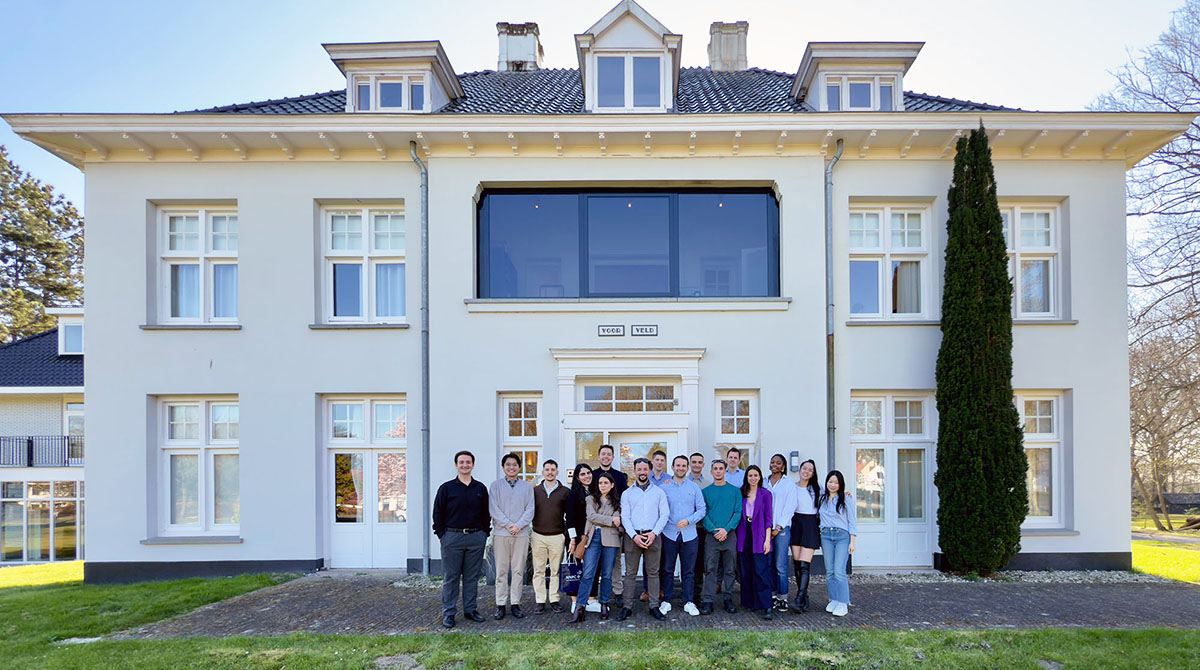
    It has become a nice tradition: every year, we invite a group of master’s students from Erasmus University Rotterdam at our office in Haren to give them a glimpse of the world of P&I.

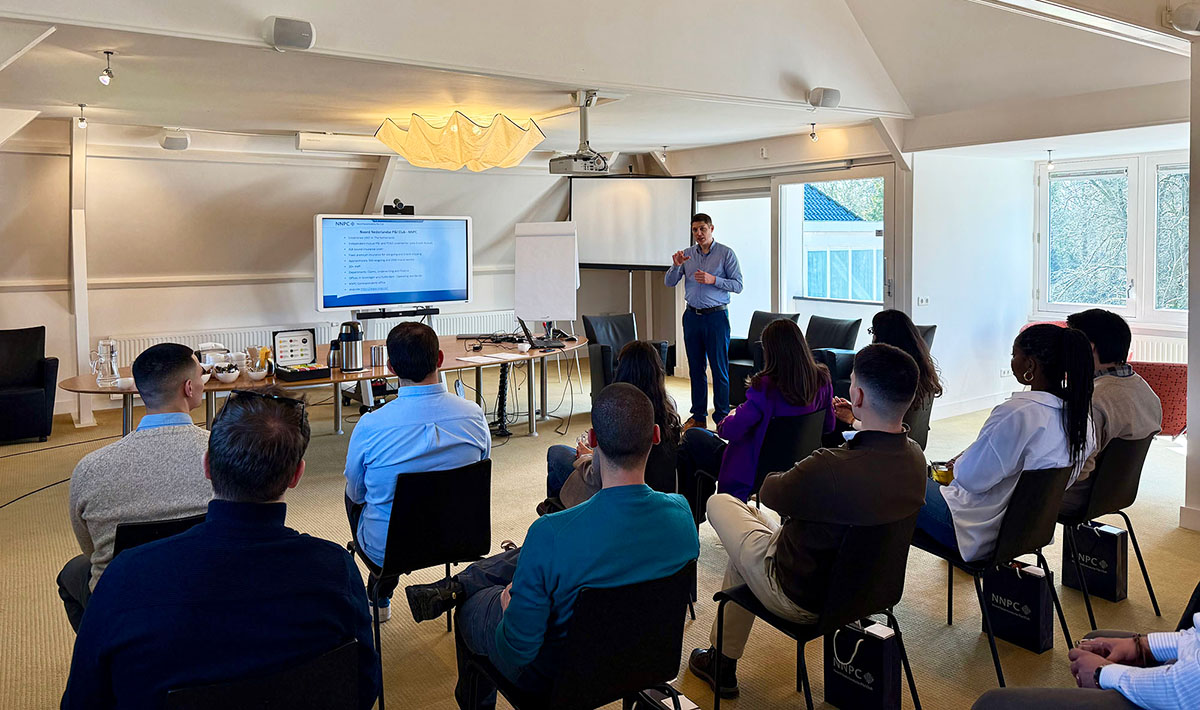
    This year, the meeting took place on Friday, 4 April. The group, consisting of graduating students, including those specializing in Maritime & Transport Law, arrived in the late morning and were immediately invited to join for lunch. The program then began with a presentation and a Q&A session. We explained in detail what NNPC does, the role of P&I insurance, and the legal aspects of handling claims.

    NNPC is eager to collaborate with Erasmus University Rotterdam and to encourage new talent to join our industry. For instance, in 2019, we sponsored the International Maritime Law Arbitration Moot, in which law students participated in a fictitious maritime tribunal.

    This page provides an impression of the recent visit from the master’s students. We wish them the best of luck with their studies and hope for a successful career in the maritime sector!

  • One-Year Time Bar for Misdelivery Claims Under the Hague Visby Rules

    One-Year Time Bar for Misdelivery Claims Under the Hague Visby Rules

    A recent UK Supreme Court judgment has clarified an important legal issue that affects misdelivery claims under the Hague Visby Rules. In this decision, the Court confirmed that the one-year time bar provided by Article III, Rule 6 applies to claims for misdelivery, even when misdelivery occurs after discharge.

    In this case, a bank financed the purchase of coal cargo and later brought a misdelivery claim against the carrier after the cargo was discharged and allegedly misdelivered from storage —well beyond the one-year limit specified in Article III, Rule 6 of the Hague Visby Rules. The UK Supreme Court ruled that the one-year time bar applies to misdelivery claims, even when the misdelivery occurs after discharge, thereby discharging the carrier from liability.

    This development is significant for shipowners because it reaffirms that any claim for mis delivery will also be subject to a time bar one year from delivery or the time the goods should have been delivered. Once that period expires, the carrier is discharged from all liability, providing finality and certainty to all parties involved.

    The complete decision of the UK Supreme Court is accessible here.

    Should any questions arise regarding its practical implications, please do not hesitate to contact the NNPC claims team at claims@nnpc.nl.
  • Proposal for U.S. Port Charges on Chinese-Built Ships

    Proposal for U.S. Port Charges on Chinese-Built Ships

    As members may be aware, the United States Trade Representative (USTR) has released a draft proposal outlining regulations to impose charges and fees on Chinese-built ships and vessel operators utilizing such ships. This initiative stems from findings by U.S. authorities that China employs unfair trade practices to gain an advantage in the global shipping market. The proposal remains subject to a public consultation period ending March 24, 2025, after which the U.S. President will make a final decision.

    While the current proposal is a draft and lacks detailed guidance on the final scope or implementation of these charges, we summarize its key elements as follows:

    1. Vessel Operators: Operators of Chinese-built vessels will face a fee upon entering U.S. ports, calculated as either:
      1. Up to $1 million per port entry for any vessel operated by the company, or
      2. Up to $1,000 per net ton of the vessel’s capacity.
    2. Chinese-Built Vessels: Fees for Chinese-built vessels will be assessed per port call, with a maximum of $1.5 million on a sliding scale determined by the proportion of Chinese-built vessels in the operator’s fleet. Alternatively, a flat fee of $1 million per vessel will apply if Chinese-built vessels constitute more than 25% of the fleet.
    3. Chinese Shipyards: An additional fee may be levied on operators with vessels on order from Chinese shipyards over the next 24 months. This fee would be calculated similarly to those for operators and existing vessels.

    The impact of these regulations will largely depend on how the final definitions of “Chinese-built vessels” and “vessel operators” are crafted. Key considerations include:

    • The proposal currently lacks a clear definition of “Chinese-built vessel”. While it evidently targets vessels constructed in Chinese shipyards, it remains uncertain whether the origin of a vessel’s value (e.g., components or materials) will factor into the definition. If so, as seen in previous U.S. tariffs, this could significantly broaden the regulations’ scope.
    • The regulations apply to operators based on the percentage of Chinese-built vessels in their fleets. Consequently, any operator with at least one Chinese-built vessel would incur fees proportional to the number of such vessels. This would mean that even a non-Chinese vessel would incur charges in the event that a difference vessel within the fleet fell within the definition.

    At this stage, the precise scope and scale of the regulations remain unclear. However, it is anticipated that some version of these measures will be enacted following the public consultation and subsequent review by the USTR. We recommend that members in any event ensure that their charterparty contracts included specific provisions dealing with the liability for port charges and fees and clarify if possible to what extent their fleet would potentially fall within the scope of the regulation based on the available information and again note the consultation period will end on 24 March 2025.

    We will of course keep members informed of any developments and in the meantime invite you to contact claims@nnpc.nl for further advice and assistance.