Author: nlnnpc-mashinaki

  • Electronic (Paperless) Trading – Approval of ICE Access Agreement (2023.01)

    Electronic (Paperless) Trading – Approval of ICE Access Agreement (2023.01)

    We wish to draw our members’ attention to the fact that the International Group of P&I Clubs has approved the ICE Access Agreement (2023.01) allowing parties to use ICE’s electronic trading system for electronic bills of lading without the need for a separate Databridge Services & Users Agreement (DSUA) in cases where:

    i. any relevant bill of lading is subject to a law that recognises its legal validity as equivalent to a paper bill of lading; and,

    ii. ICE has issued a circular notifying the user accordingly.

    We note that the ICE offering includes electronic bills of lading both under the Access Agreement and the multilateral DSUA (version 2023.1 was previously approved by the International Group).

    Exclusions of cover relating to the carriage of cargo will of course continue to apply in respect of all the approved providers in the same way as for paper systems. These exclusions include discharge at a port or place other than the port or place provided for in the contract of carriage, the issue / creation of an ante or post-dated electronic document / record, and the delivery of cargo without the production of the negotiable electronic document / record, which in the case of an approved electronic trading system will mean delivery of cargo other than in accordance with the rules of that trading system.

  • Riots in Sierra Leone

    Riots in Sierra Leone

    We have been informed by our local correspondents that an armed riot erupted in Freetown, Sierra Leone on the 26th of November, 2023, around 3 a.m. in the morning.

    According to news reports, nearly two thousand detainees escaped the Pademba Road prison facility. There have been reports of loss of lives connected to the incident. In response, to contain the unrest, the president of Sierra Leone has imposed a nationwide curfew from 9 p.m. to 6 a.m.

    Based on the information we received from our local correspondents, port operations are currently unaffected. However, members are still recommended to check in with their local agents before any port call in order to obtain real time information on the situation.

    Should you require assistance or have any questions regarding the situation, please contact NNPC by email at claims@nnpc.nl.

  • Interview: NNPC board member Margreet Huisman

    Interview: NNPC board member Margreet Huisman

    [vc_row][vc_column width=”1/12″][/vc_column][vc_column width=”10/12″][us_image image=”12606″ size=”full”][us_separator size=”custom” height=”30px”][vc_column_text css=”%7B%22default%22%3A%7B%22font-size%22%3A%2222px%22%2C%22line-height%22%3A%2232px%22%2C%22font-family%22%3A%22body%22%2C%22font-weight%22%3A%22300%22%7D%7D”]“It’s my job to get all the specialists at NNPC to contribute in the right way. A challenge, but one I enjoy very much.” In this interview, Margreet Huisman, member of NNPC’s board of directors, speaks freely about the watershed moments in her P&I club’s past and the sweeping changes still to come.[/vc_column_text][us_separator size=”custom” height=”30px”][vc_column_text]Margreet Huisman has worked at NNPC since 2007. First at Finance, then Risk & Compliance, before joining the board of directors in 2014 with a focus on executing underwriting and finance policies and internal operations. That means her work is of great influence on the organization’s daily activities.[/vc_column_text][us_separator size=”custom” height=”40px”][vc_column_text]

    How did you come to work here?

    “By coincidence. After my studies, I worked at an accountancy firm for a short while and was searching for a company and function more suited to me. In that period I was temporarily posted at NNPC on the Finance department. At the time I thought ‘this company doesn’t suit me, I’m out of here’, but CEO Rob Beets convinced me to stay by explaining we were still growing. That I could be part of that. Interested, I accepted a fulltime position, setting up the compliance and risk management department.”[/vc_column_text][us_separator size=”custom” height=”50px”][vc_column_text]

    That sounds quite challenging.

    “Absolutely. One of those challenges is that small financial institutions like us still have to comply to all the laws and regulations, just like larger firms. In arranging our organization, we thought very carefully about how many parttime or fulltime employees to take on internally and which roles we would be better off outsourcing. We also contacted Oranje and EFM, who later merged into ship insurer EOC. Collaborations like these were important to get ahead.”[/vc_column_text][us_separator size=”custom” height=”50px”][vc_column_text]

    What changed at NNPC during that time?

    “Back then, our core business was 90% service-related, namely insuring and handling claims. You can imagine what a change it is when suddenly that focus shifts to complying to laws and regulations under European supervision. Our solvability, having enough cash on hand, became increasingly more important to cover the risks we took on. Having our business operations be disciplined, ethical and constantly evaluated. And from that transition I joined the board of directors in 2014, responsible for compliance and HR policy, among other things. I was excited to do that, because I understood its value. NNPC is richly experienced in the field of P&I and it would be a waste if we didn’t match that in other areas.”[/vc_column_text][us_separator size=”custom” height=”50px”][vc_column_text]

    Could you give an example of how that benefits your members?

    “We do things very conscientiously. Looking ahead, operating dependably, consistently. To give you an example, take sanction legislation. The maritime industry today is so much more complex than it used to be. There are more stakeholders behind a ship and they all need to be vetted. Sometimes a background stakeholder is on a sanction list somewhere; how and to whom do you pay out damages in that case? We look for solutions that benefit the member, while still complying to the law. We’re able to do that because we have our things in order.”[/vc_column_text][us_separator size=”custom” height=”50px”][vc_column_text el_id=”5″]

    It comes back to what you said earlier, that NNPC is richly experienced.

    “That’s how we provide value to our members.”[/vc_column_text][us_separator size=”custom” height=”50px”][vc_column_text el_id=”5″]

    Did this transition have other consequences?

    “We used to have a supervisory board (our past management) consisting exclusively of NNPC members. Due to governance requirements, that had to change to at least fifty percent external people. How could we still keep our members close, though? We set up an advisory board, staffed with members, who advise us on products and services to this day.”[/vc_column_text][us_separator size=”custom” height=”50px”][vc_column_text el_id=”5″]

    How do you ensure your role, governance, stays at the forefront within NNPC?

    “I always try to be part of decision-making and think along, elucidate matters. Take for instance the current demands for sustainability. I will start up a process with various people to consider what the right policies could be and the consequences they would have.”[/vc_column_text][us_separator size=”custom” height=”50px”][vc_column_text el_id=”5″]

    How is NNPC positioned in the larger field of P&I insurers?

    “Our smaller size as an insurance company also gives us flexibility. Listen, I can’t pull open a can of people whenever there’s a problem, like larger organizations are able to. What we do have is a highly motivated team that knows what it’s doing. Beyond that, I have an extensive network for hiring the right specialists. With those in place, we always get the job done. And wherever possible, we try to automate processes.”[/vc_column_text][us_separator size=”custom” height=”50px”][vc_column_text el_id=”5″]

    What topics are currently at play in the world of P&I?

    “Sustainability, just like in society at large. At its core this means: how do we as marine insurers take social responsibility, both with our products and services and our investment strategies? You will always find us looking ahead. What will the risks be ten, twenty or fifty years from now? How will we remain relevant in the broadest sense? Technology marches ever forward too. What will be the effect on customer communications, the accessibility of data? Our prediction is, it’ll all become increasingly tailormade.”[/vc_column_text][us_separator size=”custom” height=”50px”][vc_column_text el_id=”5″]

    If NNPC grows in the coming years, how will that affect your flexibility and ability to think on your feet?

    “In recent years, NNPC’s fundamental existence has been called into question. The world of shipping is scaling up and we will have to move along to cater to new types of customers with our products and services. We decided in the annual meeting that NNPC would continue to be independent, but doing that requires growth, with the right solvability and financial prognoses. We developed growth scenarios that engendered successful results: cooperating with other parties on the market and launching NNPC Correspondents. It gets you thinking, though. My main concern is a long-term one: what if we fail to grow because the market changes? The market requires ever more and different products. Still, at the end of the day members choose comfort, choose a reliable partner that manages their affairs. That means you will have to adjust your business case.”[/vc_column_text][us_separator size=”custom” height=”50px”][vc_column_text el_id=”5″]

    Speaking of which, what did the Solvency II guideline mean for you?

    “Solvency II is a European directive designed to strengthen supervision on and legislation surrounding insurance companies in the EU. This directive was implemented to guarantee our stability and financial integrity, at the same time improving the protection of the insured. For us it meant another step in professionalizing our internal business operations. It made us make very well-considered choices about short-term and long-term risks. That’s how we benefited from it. We guard our solvability like hawks. Should we want to scale up now, that will prove invaluable. But don’t worry, we are and will remain relatively small, so there is little chance of us losing our flexibility.”[/vc_column_text][us_separator size=”custom” height=”50px”][vc_column_text el_id=”5″]

    Again, how might a member notice this?

    “For the people and parties we insure, we are a resoundingly stable insurer whose finances are thoroughly in order, 100% reliable. But I actually don’t want our members to notice all too much of this. When I started out at NNPC, I was taught a great lesson. “Don’t make it too technical,” I was told, “just say things as plainly as possible.” Our members aren’t interested in our profession, they just need thing to be clear and well-arranged. That notion always guided me. We evaluate and vet everything we do and make careful decisions, but for the members it is enough to know we have solid policies, streamlined processes and expert employees.”[/vc_column_text][us_separator size=”custom” height=”50px”][vc_column_text el_id=”5″]

    Is there anything you would like to change for the better?

    “Members often approach us after something has already happened. Sometimes, though, it is possible to see things coming and talk to us about it. I would sincerely like to invite people to call us as soon as possible for advice. It might well prevent very painful situations. Second, our relations are very important to us, I would like to see us get even closer. Our team forms a close-knit group of professionals that get the job done.”[/vc_column_text][us_separator size=”custom” height=”50px”][us_image image=”12794″ size=”full”][vc_column_text css=”%7B%22default%22%3A%7B%22background-color%22%3A%22%23cdf0fc%22%2C%22padding-left%22%3A%2220px%22%2C%22padding-top%22%3A%2220px%22%2C%22padding-bottom%22%3A%2220px%22%2C%22padding-right%22%3A%2220px%22%7D%7D”]

    Mutual or Fixed Premium

    Are you in need of a flexible and stable P&I insurer that knows the Dutch maritime world like the back of their hand? With our Mutual or Fixed Premium packages, NNPC has everything it needs to be of service to you.[/vc_column_text][/vc_column][vc_column width=”1/12″][/vc_column][/vc_row]

  • Information regarding the restriction of navigation of vessels through the areas of Miaodao Archipelago in Bohai Sea of China

    Information regarding the restriction of navigation of vessels through the areas of Miaodao Archipelago in Bohai Sea of China

    We have been advised by local correspondents in China of restrictions imposed on navigation of vessels through the Miaodao Archipelago in Bohai Sea of China. Miaodao Archipelago in the Bohai Sea area is a restricted area where merchant vessels are not allowed to navigate except through the Laotieshan Channel and/or the Changshan Channel. The location of this restricted area is published on the ECDIS and also in navigation warnings and Notice to Mariners.

    Vessels in the area are advised to liaise with their local agent in order to ensure their voyage planning is in compliance with the above .

    Members are advised that in case of breach the China Maritime Safety Administration (MSA) may decide to detain the vessel during the course of their incident investigations into the incident. At the same time in case of a confirmed violation owners and crew members may be subject to penalties and/or possible damage claims from local fishery farms.

    We invite our members to refer to the full notification provided by our correspondents for the matter here.

    In case members have any queries regarding the matter please contact NNPC through claim@nnpc.nl.

  • Interview with DOCK Legal Experts: the legal side of P&I

    Interview with DOCK Legal Experts: the legal side of P&I

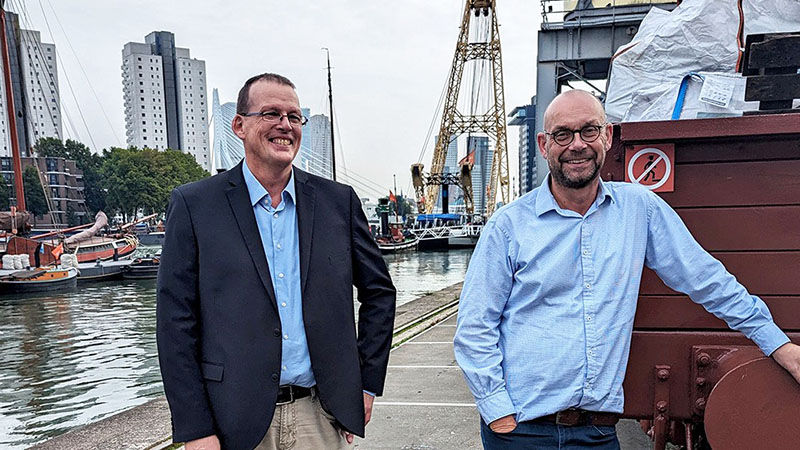
    [vc_row][vc_column width=”1/12″][/vc_column][vc_column width=”10/12″][us_image image=”12058″ size=”full”][us_separator size=”custom” height=”30px”][vc_column_text css=”%7B%22default%22%3A%7B%22font-size%22%3A%2222px%22%2C%22line-height%22%3A%2232px%22%2C%22font-family%22%3A%22body%22%2C%22font-weight%22%3A%22300%22%7D%7D”]Although NNPC has its own in-house legal assistance team, we regularly call on the lawyers’ office DOCK Legal Experts. If a particular case ever gets to a courtroom, it’s good to have the right legal counsel on your side. We spoke to the lawyers Marcel Verhagen and Ton Jumelet about the latest developments in maritime law.[/vc_column_text][us_separator size=”custom” height=”30px”][vc_column_text]Marcel Verhagen has spent his whole working career as a lawyer in maritime law. In 2002, he became a partner with Ton Jumelet, who began his career at Dutch P&I and then moved into law. Together, they specialize in transport law, not only inland navigation but also marine shipping and offshore.[/vc_column_text][us_separator size=”custom” height=”40px”][vc_column_text]

    How do you see your role as lawyers for NNPC?

    “There are two parts to it,” says Marcel. “We handle questions for the members, if it’s about something in the Netherlands, and we also do work for NNPC itself, such as contractual work and screening policies.”[/vc_column_text][us_separator size=”custom” height=”50px”][vc_column_text]

    What kind of questions do you see?

    “Changes in policy conditions, for instance,” says Ton. “Issues with the cover. There can then be a question of making sure things are seen in the correct context.”

    “As well as when drawing up agreements or advice about certain claims, for example,” says Marcel. We can’t really be much more specific than that, I’m afraid – even if I gave you an example without naming names, it’s such a tight-knit little world that everyone would instantly know who it was about.”[/vc_column_text][us_separator size=”custom” height=”50px”][vc_column_text]

    Where is your expertise in the world of P&I?

    “We have a general maritime practice,” says Marcel, “focusing on the carrier. You’ve been involved in that since 1990, haven’t you, Ton?”

    “About then,” he agrees. “We handle all the transport disputes that turn up. You used to get a lot of cases involving damaged cargo. That’s gone down a lot over recent years, in Rotterdam in particular, because of the trend towards ‘containerization’. But there are also things like charter disputes resulting from the cargoes, sanctions checks, collision damage to the ships, injuries and environmental damage. Those are all aspects of P&I.”

    Marcel adds, “Our office focuses strongly on the shipping company, the carrier. We handle all the problems that parties like those have to contend with. Not only in civil law, but also in disciplinary law and criminal law.”

    “We never act for the people who have an interest in the cargo, really,” says Ton. “There’s a two-way split there, in the Netherlands at any rate.”[/vc_column_text][us_separator size=”custom” height=”50px”][vc_column_text]

    Can you explain that dichotomy – what causes it?

    “It’s purely a question of strategy,” opines Ton. “We work for the vessels’ owners and for freight offices. If we were at the same time handling claims against them for landing damage, for instance… well, no maritime insurer is going to like that situation.”

    “You do see some law firms nowadays who handle both sides of the spectrum,” adds Marcel, “but we’ve deliberately chosen not to do that.”

    “And we find working for the shipping companies and charterers a lot nicer anyway,” says Ton.[/vc_column_text][us_separator size=”custom” height=”50px”][vc_column_text el_id=”5″]

    Can you tell us anything about the liability risks for NNPC members?

    “Sure, if you’ve got three hours,” says Marcel.

    Ton continues: “What I think will be interesting for members reading this are the many regulatory amendments that are happening at the moment. Some are developments at the global scale; others are European. Take environmental legislation, for instance, where CO2 emissions are a hot topic. We’re giving a lot of advice about that at the moment, because it’s unfamiliar territory for a lot of people, with complex regulations.”

    “Another big change is that transport issues were mostly handled as civil law cases in the past, between two peers in other words. But nowadays, governmental bodies are getting more and more involved by imposing rules. That’s something that carriers are having to deal with more and more.”[/vc_column_text][us_separator size=”custom” height=”50px”][vc_column_text el_id=”5″]

    So the governments are becoming increasingly major stakeholders?

    “Yes,” says Ton, “and what we’re also seeing is a shift in how cases are approached. In a bog-standard collision between two vessels in the past, say, it would be about little more than who had sailed incorrectly and what exactly the damage was. Nowadays, it’s almost standard that there’ll be a criminal investigation too. Not just pro forma either: I’ve seen cases where prosecutions have followed. It’s all getting much more complex.”[/vc_column_text][us_separator size=”custom” height=”50px”][vc_column_text el_id=”5″]

    Do you have an opinion about that, as a lawyer?

    Marcel light-heartedly responds “Can we answer that off the record?”

    “I think it’s very tricky to put a value judgement on that,” says Ton. “What I’d say, though, is… suppose you have a collision. Nobody wants that, in civil law terms. If you’re the captain, chief officer or engineer, you may have to face a disciplinary tribunal. But immediately getting criminal proceedings in on the act when something accidentally goes wrong… It’s a development that has major consequences for mariners, and they are often long-drawn-out issues.”

    “Shipping’s no different from other sectors,” says Marcel. When there’s an occupational accident involving stevedores or a production company, the Labour Inspectorate and even the police may take a look at it. What I do notice is that a lot depends on who attends on board. There are police officials who can relate to the captain’s position, who understand that he may have been on his feet for twelve hours solid. Being interrogated after an incident then has quite an impact. People sometimes forget that. Fortunately, I see that most of the cases are dealt with properly.”

    “What I don’t think is so helpful is that the proceedings in cases are sometimes handled separately” says Ton. “One under disciplinary law, looking at what a crewman did, and another from the criminal law perspective. If proceedings are initiated in this way someone may potentially get punished twice.”

    Marcel concurs. “There’s a general tendency in society of the legal system becoming more and involved in such matters, and to assign guilt and penalties.”[/vc_column_text][us_separator size=”custom” height=”50px”][vc_column_text el_id=”5″]

    Do you have any specific tips for NNPC members?

    “Better to call us too soon than too late,” says Marcel. “People can be reluctant to contact lawyers and try to handle things themselves instead. Sometimes we get landed with a case where we think we could have kept it under control if only we’d been called in a couple of days earlier.”

    “NNPC has an excellent claims department of its own,” adds Ton, “so they’ll normally be the first point of contact.”

    “I’d like to give the Captains another tip for when governmental officials come on board,” says Marcel. “Make sure you have discussed it with the NNPC first before you start talking to people. Not that I’m trying to stop those services from doing their job, but they do sometimes come in pretty hard and try to get you to talk straight away.”

    “An example,” says Ton. “The guy taking the statement asks you, ‘Right – what do you think happened?’ And whatever you suspected goes down in their report and it’s very difficult to get anything changed later on. The scene has been set. It’s better to say something like, ‘I don’t know. The investigations will need to be completed.’ It happens when shipping company staff are called too. The same thing. My advice is to ask them to send their questions by e-mail and you can then respond to them in due course.”

    “Discuss it briefly with NNPC or with us,” says Marcel. “Find out what your rights and obligations actually are. That makes a big difference.”[/vc_column_text][us_separator size=”custom” height=”40px”][vc_column_text el_id=”5″]Finally: you’re currently on the lookout for people with legal skills for your office in Rotterdam. What criteria would a presumably ambitious and young lawyer need to meet to work with you?

    Marcel says, “Whether you’re an experienced lawyer or just starting out, and looking for an exciting role in a young office – which we still think we are – that focuses on the transporters’ side of P&I, well… you’ve come to the right place. You can start working independently reasonably quickly and build up your own practice.”

    “I think having an affinity with shipping is more important than straight A’s,” says Ton.

    Marcel agrees. “You have to enjoy getting a phone call at eleven o’clock at night and being instructed to go straight on board to solve a problem. Or if you occasionally have to keep going all night. The flip side is that we’re a small office and there’s a lot of freedom in how you approach things.”[/vc_column_text][us_separator size=”custom” height=”50px”][us_image image=”12072″ size=”full”][vc_column_text css=”%7B%22default%22%3A%7B%22background-color%22%3A%22%23cdf0fc%22%2C%22padding-left%22%3A%2220px%22%2C%22padding-top%22%3A%2220px%22%2C%22padding-bottom%22%3A%2220px%22%2C%22padding-right%22%3A%2220px%22%7D%7D”]

    Interested in getting down to work with DOCK Legal Experts?

    Visit their site and take a look at the job vacancies list. If you have a legal question about your insurance cover or a legal dispute please contact the NNPC as soon as possible. At the NNPC, we are always available to assist and product you with answers as soon as possible.[/vc_column_text][/vc_column][vc_column width=”1/12″][/vc_column][/vc_row]


  • Israel security update- current situation in israel ports

    Israel security update- current situation in israel ports

    As per the latest update of correspondents, the current situation in Israeli ports is stated below.

    • The port of Ashdod is currently operating (albeit in emergency mode status).
    • The port of Ashkelon (used mostly by tankers) is not operating.
    • The port of Haifa which also include the Haifa Bay port and Israel shipyard port is operating as usual.
    • The port of Hadera (mostly used by bulk carriers) is operating as usual.

    Correspondents advise that Israeli Navy is scrutinizing all maritime traffic in areas around and near the port of Ashdod and Ashkelon.

    Furthermore members are to note that Ashdod port authorities have issued a notification on 07-10-23 in relation to hazardous materials (HAZMAT) carried to Ashdod. The notification prescribes that any vessel carrying hazardous materials to the port Ashdod needs to obtain prior approval from the Israel’s Administration of Shipping and Ports. Furthermore any HAZMAT under the class classification groups 1, 2.1, 2.3, as well as substances in the provided link will not be allowed: https://tinyurl.com/UNgroup0523.

    Authorities advise that the following procedure need to be followed in respect of the carriage of hazardous materials to Ashdod:

    • Shipping agents are required to send detailed list of all HAZMAT of any type on vessels scheduled to arrive at the port of Ashdod, 48 hours prior its arrival at the port. The above applies to both container ships and general and bulk cargo ships.
    • The list should include 3 reports: import, export and transit of HAZMAT.
    • The list must be sent to the control room of the TOS unit, by email: bakara-room@ashdodport.co.il. The shipowner of its agent must verify the receiving of the list at the TOS unit via phone +972-8-8517103/247. Failure to transfer the list on time may cause a delay in the vessel’s entry into the port.
    • The Shipping agent is required to remain in contact with the port’s planning unit, in order to receive information about the berthing schedule.

    In case of any further queries members may contact NNPC via claims@nnpc.nl.

  • Israel security update- current situation in Israel ports

    Israel security update- current situation in Israel ports

    We trust that our members will have noted the developments unfolding in Israel over the weekend. While the situation is currently still unclear, with skirmishes currently still ongoing on the mainland of South Israel between Israel Defence Force (IDF) and Hamas militants, we are advised by local P&I correspondents that the ports of Haifa and Ashdod are working as normal and that there is at present no restriction on maritime traffic to/from these ports.

    Given the anticipated increased deployment of Israeli Defence Forces in the coming days in South Israel bordering Gaza, it is expected that the situation will remain volatile over the course of the coming days/weeks. We will keep our members duly advised of updates received through local correspondents.

    In the meantime we advise our members to request local port agents for the latest advice on port accessibility and security prior to calling Israeli ports.

    In case of further questions members are invited to contact NNPC via claims@nnpc.nl.

  • The updated IG Standard Form Letters of Indemnity (LOI) wordings!

    The updated IG Standard Form Letters of Indemnity (LOI) wordings!

    In response to the evolving dynamics of the shipping industry, the IG has diligently reviewed and revised these LOI wordings, which were last updated in 2010. Despite the known risks associated with LOIs, they continue to be widely utilized in our industry.

    With valuable insights from charterer and owner representatives, as well as guidance from BIMCO, we are proud to present the revised wordings. They can be easily downloaded from the links provided below and, of course, from our company’s website. Moreover, we encourage you to review the explanatory notes, highlighting the individual changes made.

    Noteworthy in the updated wordings is a more prominent warning, reminding our members about the potential impact on P&I cover. As always, we strongly advise our members who accept LOIs to exercise due diligence in assessing the financial standing of any counterparty involved in a Letter of Indemnity.

    Stay up-to-date with the latest IG recommended LOI wordings and proactively manage your risks in the ever-changing shipping landscape. As always, if you have any questions about the use of LOI or need any assistance in this regard, please contact us at all times via claims@nnpc.nl.

    Downloads:

  • Carriage of Palm Kernel Shells

    Carriage of Palm Kernel Shells

    In recent months we have assisted in a number of cases involving the carriage of Palm Kernel Shells (PKS). PKS is a natural by-product of palm oil processing and does not yet appear in the IMSBC code and are therefore carried under section 1.3 of the code. The cargo has self-heating properties but submissions to the IMO for inclusion as a Group B cargo have not yet been approved.

    In recent cases the moisture content was usually reported in the range of 20% to 25% but in practice was much higher. This meant a higher risk of self-heating and gas emissions which in turn meant greater risks for the vessel and crew during the voyage. We recommend that members always request the cargo information well in advance of the vessels arrival including the Shippers Declaration to allow the member to check the contents and perform additional testing if necessary. The shippers often refuse to provide this information on the basis that the cargo is non-hazardous but we recommend that members insist that this information be provided to allow the vessel to check the characteristics of the cargo.

    The BIMCO has published a number of recommendations in respect of the carriage of PKS which can be accessed via: https://www.bimco.org/news/cargo/20170207_palm_kernel_shells and include the following safety measures:

    • Request cargo information in accordance with section 1.3 of the IMSBC Code.
    • Monitor the cargo surface temperature at the time of loading. The cargo should be accepted for loading only if the temperature does not exceed 55°C and the moisture content does not exceed 11%.
    • Measure and record methane, oxygen and carbon monoxide levels during the voyage with a gas meter operating on either infrared or thermal conductivity. Catalytic sensors do not operate correctly below ~10% oxygen.
    • Ventilate cargo spaces immediately if methane levels exceed 1% by volume of 20% LEL.
    • Ventilation is the most important prevention measure. If the emissions from the cargo increase expert assistance should be sought.
    • Ban smoking, welding and use of naked flames on deck while the cargo is on board.
    • Do not permit personnel to enter the cargo holds and spaces adjacent to the cargo holds unless a proper risk assessment has been carried out and a permit for entry into an enclosed space has been issued.
    • Apply water and/or CO2 in the event of a fire in the hold, as both are considered as suitable extinguishing media for the cargo. Keep in mind that that the accumulation of gas may pose a fire hazard.

    In the event of any specific questions we invite our Members to contact NNPC through claims@nnpc.nl.

  • Cargo Shortage Situation at Moroccan and Algerian Ports

    Cargo Shortage Situation at Moroccan and Algerian Ports

    In recent months we have seen an increase in shortage claims in respect of discharging dry bulk cargo, particularly powdery or granulated cargo and grains, most notably in North African ports and European ports (such as UK and Spain).

    The shortage claims that we have seen are in most cases founded on a discrepancy between shore scale measurements and draft survey figures and in particular where the difference is substantial (usually above 0.5-1% which is generally regarded as allowed trade margin). In such cases the question arises which weighing method will take precedence over the other. Although there is no legal hierarchy, we note that in certain jurisdictions (such as for example Morocco or Algeria) Courts tend to rely mainly on results obtained by shore weighbridge scales in the discharge port, rather than draft survey figures, as shore weighbridge scales are thought to be more reliable (certainly when weigh bridge slips and calibration certificates are presented).

    In order to minimize exposure to shortage claims we recommend our members to take follow precautionary steps when carrying bulk cargoes:

    • Conduct a draft survey at both load and discharge port and to provide a copy thereof to shippers and receivers. The draft surveys should preferably be done in the presence of shippers/receivers and the Master should issue a formal LOP protesting against any difference in weight recorded by shore weighing scales.
    • Perform a hatch sealing and prepare a hatch sealing and opening report. It is recommended that photographs are taken of the holds before, during and after loading and discharging. In this respect members should note that a Crew Instruction Manual is available which is available on the NNPC website through following link.
    • During discharge any spillage during the cargo operations must be reported and protested against by way of a formal LOP issued by the master.
    • Incorporate a clause in the C/P explicitly placing the responsibility for loading and discharging operations on Shippers/Receivers. The C/P should also specify that the loaded and discharged weight will be determined by a fully and finally binding ship’s draft survey. The cargo interests should be invited and are ideally to jointly attend the draft survey.
    • Ensure that the Inter-Club New York Produce Exchange Agreement is incorporated in the C/P so that liability shortage claims can be apportioned 50/50 between owners and charterers.
    • When a letter of protest alleging cargo shortage is presented for signature to the Vessel, the Master may consider signing such letter of protest provided that his signature is accompanied by a remark that “all holds are empty and the full B/L quantity has been discharged”.
    • If certain ports are known for recurring shortage claims (possibly with the same receivers) members may consider appointing an independent surveyor to conduct hatch unsealing and/or assist with performing draft surveys.

    If and when presented with a letter of protest alleging cargo shortages we advise members to contact NNPC via claims@nnpc.nl.