Author: nlnnpc-mashinaki

  • Update: Coronavirus – Romania

    This update follows on our previous newsletter on COVID-19 “Volume 2020/8 Update: Coronavirus” as published on the NNPC website on 26 March 2020.

    Today a new regulation was issued by the Romanian Ministry of Transport & the Ministry of Health. This regulation requires all vessels calling the Romanian Ports to be equipped with the necessary protection equipment when pilots are required on board. If the vessels are found not to be equipped with necessary protection materials, then the vessel will be required to wait in quarantine period for 14 days counting from the date of last port of call.

    Please find hereunder the list of protective equipment required by the port authorities to be present and available onboard:

    Disposable protective gloves;
    Disposable face masks with filter;
    Protection glasses;
    Alcohol type disinfectant/sanitizer;
    Disposable overalls.
    Should the vessel not have disposable overalls on board, then overalls made of cotton should be made available, which can be disposed when the pilot is leaving the vessel. This last requirement applies only to vessels whose last port of call was one of the countries where the pandemic is widespread. There is no specific list attached to the Regulation but based on information locally available the following countries are declared as so-called “red zones”: Italy, Spain, Germany, France and Iran.

    Anchorage areas where the ships will be allowed to wait in quarantine are the port of Sulina (for the vessels coming through Black Sea) or 44 NM off Danube river (for the vessels which sail through the Bystroye Canal). For sake of good order, if quarantined, members are advised to doublecheck with their local agent in respect of exact anchoring positions.

    Members are advised to supply their vessels calling Romanian Ports with necessary protection equipment listed above in order to avoid any delays.

    Furthermore we would strongly encourage members to request regular updates from their local agents with respect to the current restrictions in the respective load and discharge ports. Updated information per country can be found in the Novel coronavirus section on BIMCO.org. More general information on COVID-19 and the latest WHO situation reports can be consulted here.

    We trust that this newsletter is of assistance to our members, however in case of any specific questions, we invite our members to contact us at claims@nnpc.nl
  • Renewal update K&R insurance

    Through this article we would like to inform you about important changes relating to the Kidnap & Ransom (K&R) cover. The NNPC has taken out a K&R insurance with Aspen for its members. As of 29 March 2020, this insurance is renewed for one year and offers NNPC members a free cover against the financial risks of piracy.

    Aspen’s K&R insurance only excludes a few areas worldwide. For the upcoming year only Yemen and Somalia are completely excluded. In addition, there are only 2 areas for which an additional premium applies: the Gulf of Guinea and the Indian Ocean/Gulf of Aden. Last year, the coordinates of these areas were exactly the same as those mentioned on the “Hull War, Piracy, Terrorism and Related Perils Listed Areas”, also known as the JWLA-024.

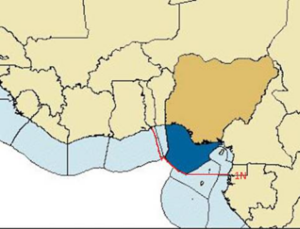
    However, as of 29 March 2020, the excluded area in the Gulf of Guinea will be expanded and additional K&R coverage will be necessary for all transits to or through the waters north of 1°N in the Gulf of Guinea (this was previously 3°N ). This means that the waters of Cameroon, Nigeria and (a part of) Soa Tome & Principe are no longer part of the free world wide cover. To get a better understanding of this we would like to share the following illustrative map as a visual indication:

    The red line shows the boundary between the worldwide cover and the excluded area. In addition to the expansion of the excluded area Aspen also increased the premium and the minimum freeboard requirements for transits to or through this areas.

    As far as the excluded area in the Indian Ocean/Gulf of Aden is concerned, we can confirm that this area remains the same as listed on the JWLA-024. The premium for trips to or through this area have been adjusted and have been reduced compared to last year.

    Furthermore, similar to last year, you will need to notify our Underwriting department if you are planning to make transits to or through one of the other JWLA areas in order for us to guarantee cover.

    In summary, if you wish to use NNPC’s K&R cover for our members you should notify us in advance of all trips to the Gulf of Guinea and JWLA listed areas. In most cases we will be able to confirm cover within a day but for some areas we may have additional requirements such as a citadel, guards, razor wire etc. and/or charge an additional premium before we can confirm that K&R cover remains in place.

    If you have any questions about these changes or would like to receive a quote for an upcoming trip through a risk area, please contact the Underwriting department at underwriting@nnpc.nl.

  • Update: Coronavirus

    We refer to our previous circulars regarding the developments surrounding the Corona pandemic. The speed at which the virus has spread and the international community has responded has been unprecedented in its scale and impact. The international transport sector has been particularly affected with growing uncertainty about the demand for and availability of cargoes, the logistical arrangements within ports and the impact of measures taken by authorities. 

    We have in recent weeks provided members with advice relating to existing contracts and the measures which can be taken to protect their interests going forward. We expect that the crisis will continue for some time and therefore, for the benefit of all members, wish to provide a general circular dedicated to the legal implications of the Corona pandemic.

    When assessing a request for advice, it is important to draw a distinction between existing and future contracts.

    Existing Contracts: The performance of existing contracts may be made more difficult and in some cases impossible, by the developments surrounding the pandemic. In the case of time charters, the market may result in time-charterers operating at a loss, whilst in the case of voyage charters and liner contracts, the conditions in specific ports may delay or prevent the loading and discharge of goods. In the case of existing contracts it is necessary to:

    • identify the relevant provisions which apply;
    • identify which provisions affect obligations, apportion responsibility or allow termination of the contract;
    • investigate the implications of any difference between contracts within the charter party chain and then apply those terms to the facts and circumstances.

    Future contracts: For future contracts it is crucial to balance the need to include appropriate clauses addressing pandemics and quarantines (see our Corona Update of 12 March 2020) and the commercial and practical realities of the current market. In addition, it is crucial to attempt to identify and address particular risks in advance and where possible, for example what will be agreed in the event that the intended discharge port is rendered inaccessible due to the measures taken in response to the Coronavirus. Contracts and clauses which were perfectly fine just weeks ago may be completely inadequate to address the current market. We recommend including specific reference to COVID-19 and identifying any particular risks which arise in the trade or in the specific ports.

    Legal disputes due to corona:  We have already received and assisted in a number of cases in which legal disputes have arisen or threaten to do so as a result of the Corona pandemic. Based on these cases we are able, at least in a general sense, to provide some guidance on the potential legal position in relation to the following:

    – Quarantine: In general terms the position in relation to quarantines is that any quarantine which is imposed due to the condition of the vessel and her crew (an ill seafarer or infection risks on board) shall be for the risk of the owners whereas any quarantine which is imposed by the port as a general measure (such as all vessels being forced to wait five days before proceeding into port) shall be for the risk of the charterers.

    – Force Majeure: We have seen repeated attempts to rely on Force Majeure as a basis to (threaten to) terminate a contract. We note that Force Majeure under English law is in principle a protection afforded to a party in the event that the performance of a contract has become impossible (or it would be unreasonable to require performance) due to something unforeseeable which was beyond their control at the time of contracting. For example, it is not sufficient that the performance of the contract has become slightly more expensive. A contract concluded 6 months is more likely to allow an appeal to Force Majeure than one concluded 1 month ago.

    Needless to say any legal dispute will need to be assessed on a case by case basis against the terms and conditions of the relevant charter party. We nevertheless trust that the above provides some guidance. We invite our members to contact us with any particular issues or disputes which may arise. We also wish to refer you to the two detailed circulars of the Club’s English solicitors Reed Smith of 18 March 2020: Circulair Reed Smith “The impact of COVID-19 and of 25 March 2020:
    Circulair Reed Smith “COVID-19 – Shipping update 2 – Emerging themes as well as the free Corona service of our correspondent GAC which provides worldwide updates by country regarding measures imposed to address the Corona pandemic https://www.gac.com/news–media/read-hot-port-news/.

  • Regulations of the People’s Republic of China (PRC) on the prevention and control of Marine Pollution from ships

    We refer to the article issued on 15 June 2015 on China Spill Response Contract about the prevention and control of marine pollution from ships and the requirement that owners/operators of:

    (a) any ship carrying polluting and hazardous cargoes in bulk; or
    (b) any other ship above 10,000 GT

    enter into a pollution clean-up contract with a Ship Pollution Response Organisation (SPRO) before the ship enters a PRC port.

    Members are informed that the PRC Maritime Safety Agency (MSA) recently published new measures of administration on agreement for Ship Pollution Response Regime which came into effect on 1 March 2020.

    In conjunction with the new measures, the MSA has also published a directory of hazardous bulk liquid cargo apt to cause pollution (the ‘directory’) for which oil booms need to be deployed during cargo operations or an agreement with an SPRO needs to be concluded.

    As can be seen from the updated SPRO table (appendix A), there is no material change to the SPRO requirements. As a result, however, owners and members will note that from 1 March 2020, you will not need SPRO agreements for any of the following:

    • any ship under 10,000 GT either in ballast or carrying a liquid cargo in bulk not listed in the directory;
    • any ship of any size that is driven by clean fuels and either:
      (i) carrying a liquid cargo not in bulk (even if that liquid is listed in the directory);
      (ii) carrying a liquid in bulk that is not listed in the directory;
      (iii) carrying a non-liquid (ie solid) cargo.
    • A copy of the directory is now available (in Chinese) on the China MSA website.

    Pursuant to the new measures, the MSA no longer publishes its own recommended SPRO agreement wording and the parties are free to negotiate all terms. The China Diving and Salvage Association (CDSA) established a new committee which will take responsibility for training and assessing the capabilities of SPROs, establishing a central database for information as to SPRO capabilities and negotiating contract terms.
    However, this committee is in its infancy and owners are advised to check with local agents, and the club when looking for a new SPRO for a particular Chinese port.

    In 2015 the International Group (IG) published a standard wording for SPRO agreements  and recommends that owners continue to use this wording for new contracts.
    If you are asked to agree to a variation of the attached recommended contract (appendix B) we advise you to contact the NNPC to ensure that this variation does not cause the contract to fall outside the scope of cover.

  • Update: Coronavirus

    In response to recent developments in relation to the spread of the Corona Virus we would like to update you as follows:

    • The number of infections in Europe is continuing to increase and a number of authorities have now taken far reaching measures in order to prevent and limit the spread of the virus.
    • A number of countries (including Australia, Romania and Algeria) are applying “floating quarantine zone” in one or more ports. Any vessel which has recently been in a high-risk area may be quarantined outside port limits for a period of time to ensure that none of the crew have been infected.
    • Cargo operations in many Chinese ports have slowed down considerably due to a lack of stevedores and there are considerable logistical challenges in the inland transport of goods. As a result, the number of shipments to and from China has been reduced considerably.
    • In Europe a number of measures have been taken to check the health status of crewmembers and vessels are required to submit a list of previous ports and the medical status of crewmembers prior to arrival in a number of countries.
    • We recommend checking the position with the local agent well in advance and ensuring that you are familiar with the requirements and potential risks of each individual port. This will hopefully assist in preventing delays as much as possible.
    • Finally, we recommend including the “BIMCO Infectious or Contagious Diseases Clause for Time Charter Parties 2015” or the “BIMCO Infectious or Contagious Diseases Clause for Voyage Charter Parties 2015” in future contracts as appropriate.

    We understand from our members and correspondents that to date the direct operational issues have been limited, but we will continue to keep a close eye on developments going forward. In conclusion, we also recommend following the circulars of the IMO available on their website.

  • Custom Fines: Solvent Yellow 124

    In our news circular 16 of 2019 we explained our involvement in several cases where Customs Fines were imposed on shipowners in the Netherlands due to alleged violations of the regulatory requirements regard the concentration levels of the identifier “Solvent Yellow 124” in duty-free bunkers.

    In almost all of these cases the courts have ruled against the shipowner. An exception was one of the matters which we discussed in our aforementioned circular. The custom officials appealed the decision and the appeal court has in the meantime hand down judgement, ruling as follows:

    • The court was satisfied that the samples used by the customs officials were correctly taken and analysed;
    • The duty to show that the bunkers used by a vessel were in fact duty-free lies with the shipowner; and
    • The fact that the concentration levels of solvent yellow in the bunkers did not meet the requirements under the applicable regulations was sufficient for a fine to be imposed. It was not necessary for the customs officials to provide evidence explaining the variation in concentration levels.

    In summary, the appeal court ruled in favour of the custom officials and overruled the court of first instance. Whilst there are still matters ongoing but as things stand the Dutch jurisprudence provides very little prospect to any shipowner to successfully oppose a fine in circumstances where the bunkers on board are found to contain an incorrect concentration of solvent yellow.

    We repeat our previous recommendations for members and insureds who consume duty free bunkers to take the following precautionary measures:

    • Ensure that during any inspection comparative samples are taken and retained on board;
    • Take a sealed sample of each bunker delivery from the vessel’s manifold;
    • Retain copies of all purchase orders and delivery notes of bunker deliveries to the vessel;
    • Always react promptly to any communications or invitations from Customs pursuant to any inspection, such as invitations for a joint analysis for the filing of submissions.

    As previously advised, we recommend that the relevant documentation and evidence be retained as long as reasonably possible to ensure that if a fine is imposed at a later stage the shipowner has the best possible prospect of a successful defence.

  • Proposal for stricter rules for fire safety on board container ships

    The International Union of Marine Insurance (IUMI) has submitted a proposal to the International Maritime Organization (IMO) regarding fire regulations for container ships. Due to the increase in size and complexity of container ships over the past twenty years, the current regulations of the International Convention for the Safety of Life at Sea (SOLAS) is considered by many to be insufficient to guarantee the safety of container transport.

    The proposal contains the following recommendations:

    • Fire-fighting systems must be set up in the ship in such a way as to separate fire compartments so that any fire can be insulated and prevented from spreading;
    • There must be systems on board capable of cooling the container affected by fire and allowing them to burn out in a controlled manner;
    • Fixed monitors must be present to allow fires to be detected and localised and must allow for an appropriate and effective response mechanism; and
    • Better prevention methods must be implemented to address the rise in cargo misdeclaration which has allowed high risk cargoes to be loaded on board without appropriate warnings or safety measures.

    The recommendations are a response to the fact that in the past two decades, container ship freight capacity has increased from four million TEU in 2000 to twenty million TEU in 2019. In the period between 2000 and 2015 a total of 56 fires occurred on container ships were reported with total claims exceeding one billion dollars. The proposal will be submitted to the IMO’s  Maritime Safety Committee in May.

  • Outbreak coronavirus

    The coronavirus outbreak continues to grow in China and beyond and whilst infections remain concentrated in Central China, at least 16 countries globally have now reported infections including the US, Thailand, Japan and the Republic of Korea. Currently, restrictions on travel are in force in ten cities in the central China. The Chinese authorities have taken a number of measures in an attempt to limit the spread of the virus including cancelling many public events.

    At this time there are no reported complications for shipping operations for the time being, however, if your vessel is calling a Chinese port we recommend that you keep up to date with the WHO reports and recommendations as they contain the latest information on the outbreak and measures being taken by the local authorities. You can find this information via the link: https://www.who.int/emergencies/diseases/novel-coronavirus-2019.

    We also recommend that proper planning arrangements are made in co-ordination with the agents and port authorities regarding the arrangements during port operations, including measures to limit infection or contamination which may be imposed or advised.

    We also draw your attention to the general recommendations provided by the WHO as follows:

    • Washing of hands using soap and water and alcohol-based hand rub;
    • When coughing and sneezing cover mouth and nose with a tissue, and throw away the tissue after use and wash your hands immediately thereafter;
    • Avoid close contact with anyone who has fever and cough;
    • If anyone on board who has recently been in any area with a risk of infection (including airports) has a fever, coughing and difficulty breathing seek medical advice;
    • Avoid markets in areas currently experiencing cases of coronavirus;
    • Avoid raw or undercooked animal products and prevent cross-contamination with uncooked foods, as per good food safety practices.

    We will continue to monitor matters and will provide an update on any shipping related developments.

  • Wave added as an approved electronic trading system

    The ‘International Group’ of P&I Clubs has added WAVE (The WAVE Network) to her list of approved systems. Earlier in 2019, Edox Online was approved as an electronic trading system, (see our article of July 16, 2019).

    Like ‘Edox Online’, ‘WAVE’ uses blockchain technology for various coded supply chain documents and to sign them without using a central server or register. A legal framework supports the ‘WAVE’ system, which facilitates the transfer and approval of electronic Bills of Lading. This makes ‘WAVE’, alongside ‘Edox Online’, the second approved system that is fully decentralized. As a result, there is no administrator and every change in a document is visible to all participants. The ‘International Group’ of P&I Clubs has reviewed and approved ‘WAVE’s legal documents and terms of use.

    The exclusions from coverage, determined by the ‘International Group’ of P&I Clubs, are the same for paper systems and digital systems. This includes the delivery of the product to a place other than agreed in the charterparty, ante dated documents or the delivery of cargo without associated Bill of Lading. These exclusions can also be read in article 16 of our insurance conditions.

    In the event that you make use of these systems we invite you to contact us to share your experience.

  • The Ballast Water Convention

    The Ballast Water management Convention came into force on 8 September 2017 and applies to all international seagoing vessels that use a ballast system. The convention is a response to some of the potentially serious ecological, economic and health issues which are associated with transporting and releasing ballast water, especially if the ballast water collected from one region is released into an entirely different region resulting in organisms, bacteria, microbes, plants and small invertebrates being transferred into the local ecosystem.

    In order to address this the Ballast Water Management Convention contains rules on the requirements for a Ballast Water Management System and the manner in which vessels should deal with ballast water generally. The convention differentiates based on the year in which the vessel was constructed and the ballast water management capacity in order to establish the relevant requirements with which a vessel must comply. In this regard the following matters are significant:

    1. The two standards that apply are the so- called D1 and D2 standards.
    2. The Convention applies to vessels registered in contracting parties of the convention only, but vessels flagged in non-parties would still need to comply by virtue of Article 3(3).
    3. The D1 standard applies to all vessels and provides that the ballast water must be released at least 200 nautical miles from shore and in water of a depth of no less than 200 metres. In addition, the vessel must keep a ballast water logbook and must have a ballast water management certificate.
    4. In order to comply with the D2 standard, a vessel must have a Ballast Water Management System. All vessels built after 8 September 2017 must meet this requirement. This system treats the ballast water to ensure that it complies with the limits imposed by the code and installations onboard for this purpose will be inspected according to the requirements of the convention.

    Failure to comply with the requirements of the Convention or the rules on the release of ballast water which constitute a violation will result in sanctions being imposed in accordance with the national law of the member state.

    The IMO has drawn up an overview of compliance requirements as included in this circular. Most importantly, vessels built on or after 8 September 2017 already have to comply with the D2 standard and all vessels have to comply with the D2 standard after 8 September 2024.